
See the Pattern. Change What Is Yours.
Learn a practical system for recognizing recurring relationship patterns, understanding your position inside them, and choosing clearer, more intentional next moves.
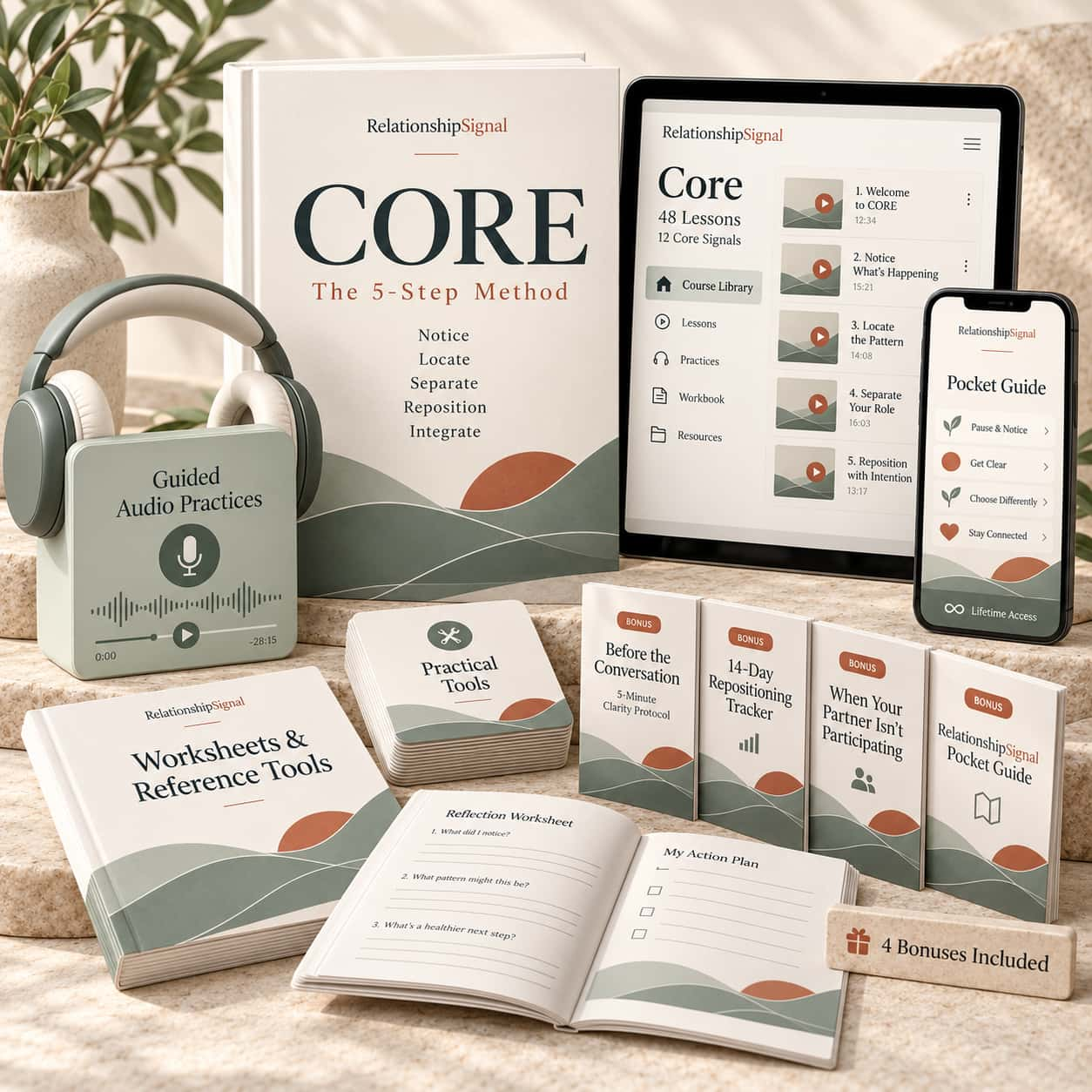
The subject may change. The relational position you return to often does not.
Relationship problems can look very different on the surface.
One disagreement may be about money. Another may be about attention, family, affection, responsibilities or the future.
Yet underneath the immediate issue, people often return to familiar reactions: over-explaining, withdrawing, correcting, carrying too much, waiting for the other person to change or losing clarity about what is actually theirs to do.
RelationshipSignal helps you move beneath the topic and recognize the pattern.
The goal is not to diagnose the relationship.
It is to help you see the pattern clearly enough to identify the part you can actually work with.
Pattern before blame
Move from “Who is the problem?” toward understanding what keeps happening between you.
Position before control
Instead of trying to manage another adult, clarify the position you are taking inside the relationship.
Practice before theory
Use practical questions, guided practices and concrete next moves when the pattern appears in real life.
One Method. Different Relationship Situations.
A repeatable five-step process for moving from automatic reaction toward greater clarity and intentional action.
See what is actually happening.
Identify your position inside the pattern.
Clarify what is yours and what is not.
Choose a clearer relational position.
Turn insight into a practical next move.
But you can learn to do your part remarkably well.
Which patterns feel familiar?
Each Signal gives you a practical lens for recognizing what may be happening beneath a recurring relationship problem.
When the conversation keeps becoming about tone, defensiveness or being misunderstood instead of the issue itself.
When different arguments keep returning to the same emotional positions and predictable reactions.
When you are still together, but warmth, availability or meaningful contact feels increasingly difficult to reach.
When care, effort or responsibility begins to feel chronically one-sided and resentment starts building underneath.
When being physically together no longer feels like being meaningfully present with each other.
When uncertainty, omissions or unanswered questions begin changing how safe shared reality feels.
When financial decisions reveal different expectations about security, contribution, freedom or the future.
When one person feels responsible for noticing, remembering, organizing or carrying more of everyday life.
When help, advice or improvement quietly turns into persistent correction of another adult.
When closeness, touch or affection becomes loaded with pressure, interpretation or withdrawal.
When closeness begins to compete with individuality, privacy, personal choices or room to remain yourself.
When you care about each other but are increasingly unclear whether you are moving toward the same kind of life.
A working system — not just lessons to watch.
Built to fit real life — not become another unfinished course.
RelationshipSignal Core is self-paced. Move through the foundations sequentially, then return to individual Signals and tools whenever needed.
Take the method beyond the lesson.
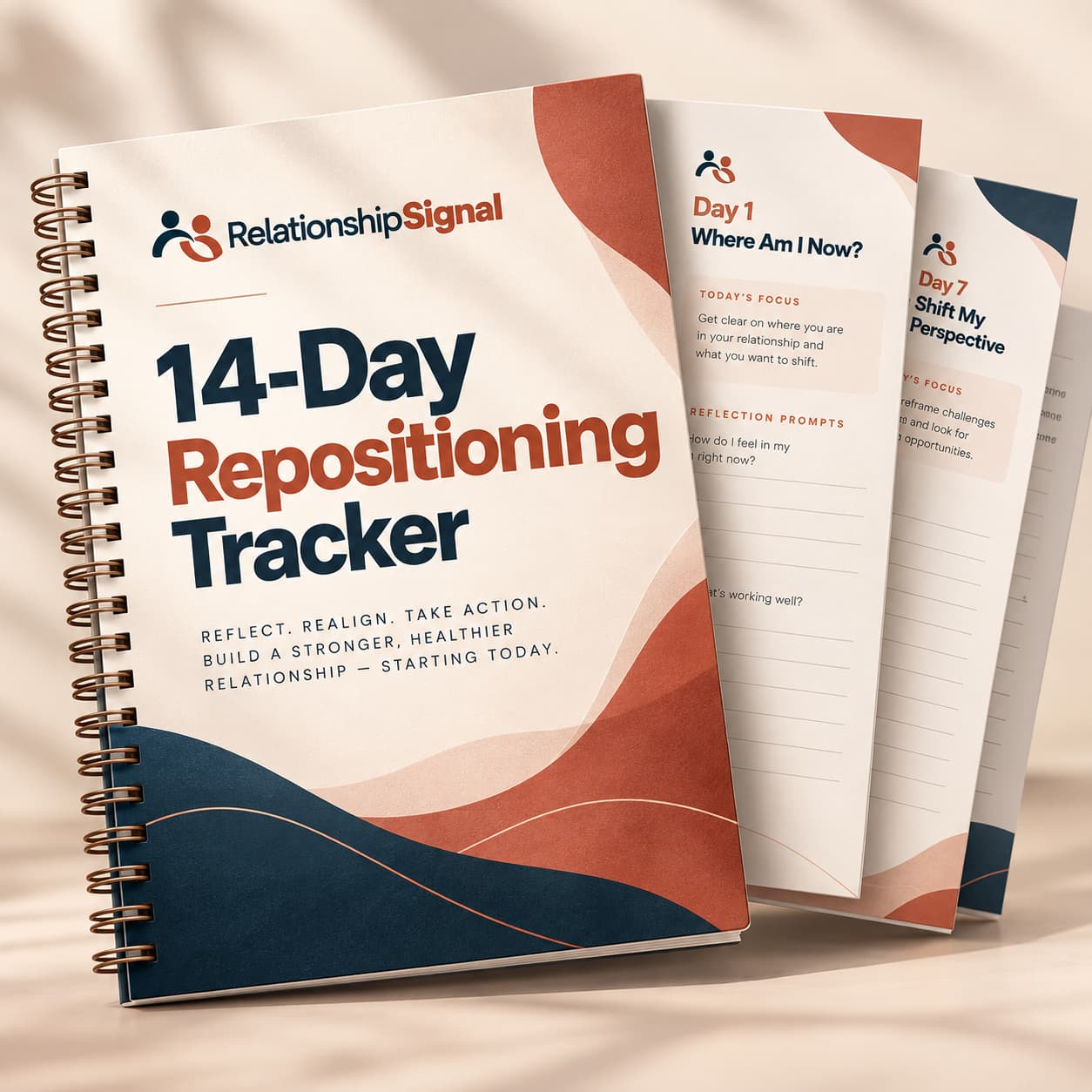
Work with the method in situations that matter outside the course.
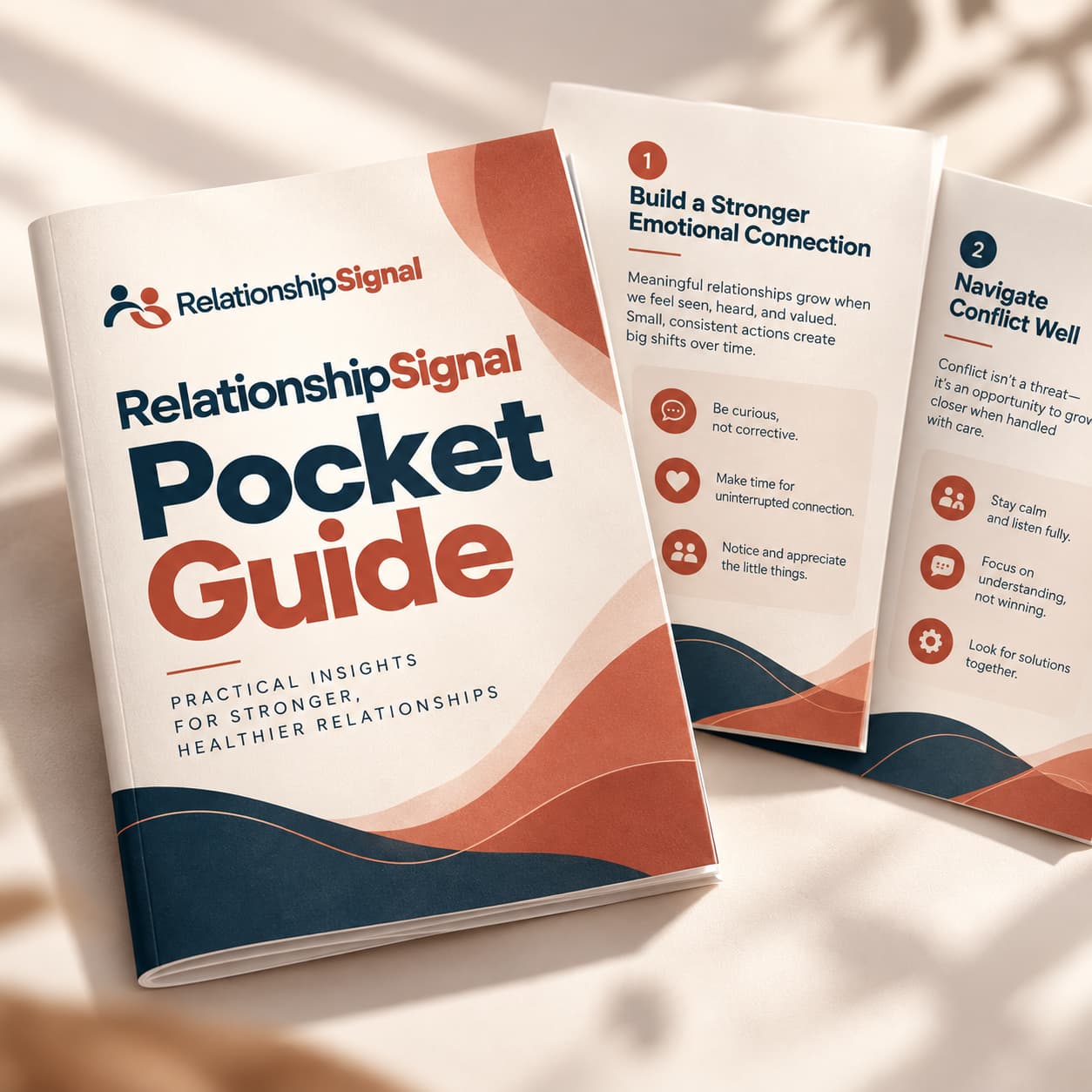
Keep the method and core distinctions available when patterns return.
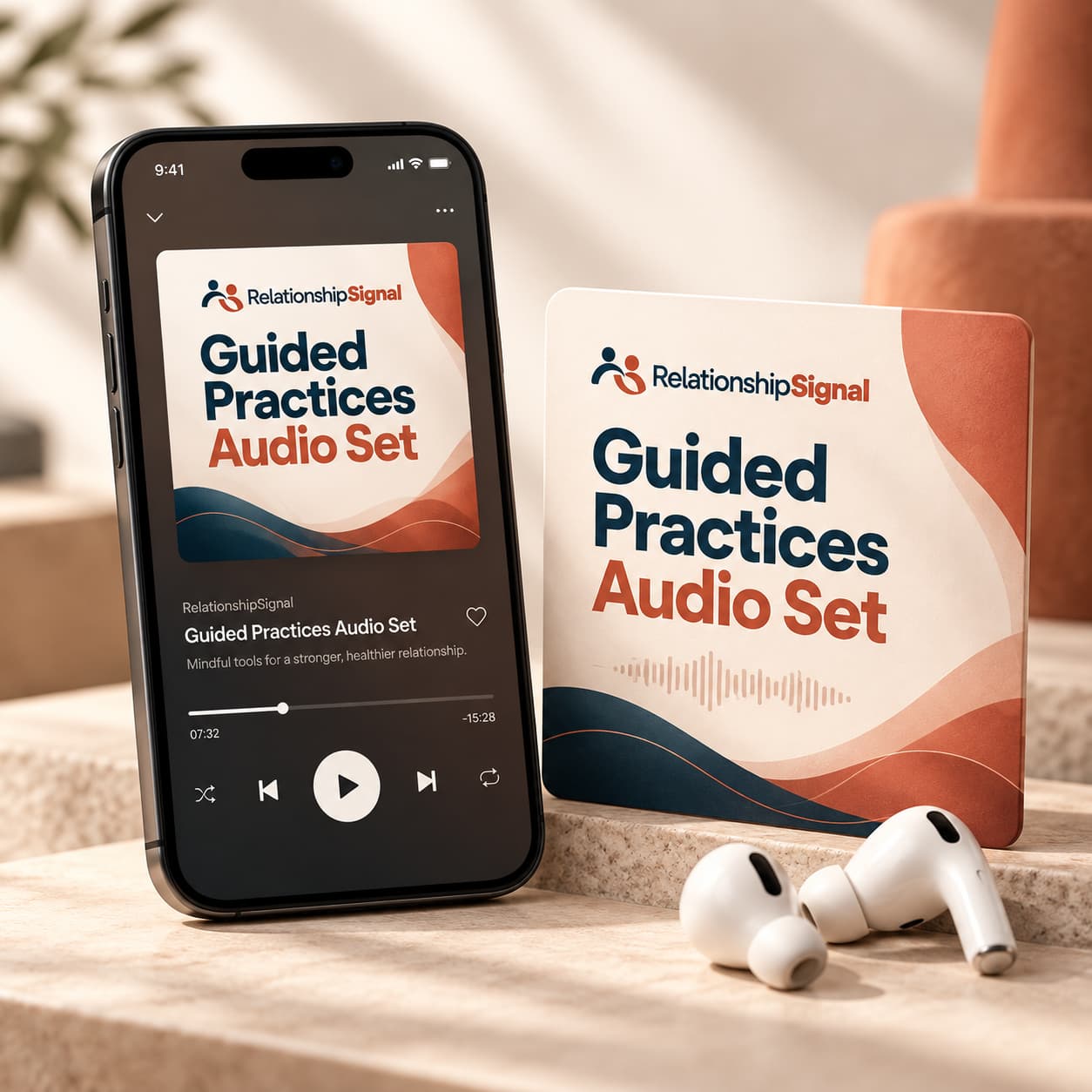
Slow the automatic response and explore a clearer relational position.
When understanding the pattern is only the beginning.
Four practical resources designed to help you use the RelationshipSignal method when insight needs to become action.

Before the Conversation
A 5-Minute Clarity Protocol for preparing before difficult or important conversations.
14-Day Repositioning Tracker
Observe recurring situations over two weeks and practice responding with greater clarity and intention.
When Your Partner Isn't Participating
Work on your own relational position even when your partner is not participating in the same process.
RelationshipSignal Pocket Guide
Keep the five-step method, distinctions and practical prompts available when a familiar pattern appears again.
The subject changes. The underlying position often does not.
Over years of working directly with relationship problems, I kept seeing a recurring pattern.
One relationship was struggling with money. Another with family involvement. Another with emotional distance, responsibilities, communication or intimacy.
The circumstances were different. But underneath them, many of the same relational positions kept appearing: carrying too much, correcting another adult, withdrawing, waiting for the other person to change, losing boundaries or taking responsibility for something that was never fully yours.
RelationshipSignal was created to make those patterns easier to see — and to provide a practical way to work with the part that actually belongs to you.
Practical relationship education built from direct experience.

Luiz Albertini
Luiz Albertini has more than 12 years of direct experience working with relationship patterns, communication, relational positioning and practical personal development, including work with more than 1,500 clients in person.
His broader background brings together decades of experience in attention, meditation and practical education, translated here into a structured, non-clinical educational framework for recognizing recurring relationship patterns.
RelationshipSignal is not built around diagnosing another person. Its central question is simpler: What is happening here, what part is mine, and what is my clearest next move?
What Participants Commonly Say After Working With Luiz
Across years of in-person work, several themes appear repeatedly in the way participants describe the experience.
Seeing what is actually happening
Participants often describe a shift from feeling confused by the same recurring problems to understanding the relationship dynamics underneath them. Once the pattern becomes clearer, the available next moves often become clearer too.
Identifying what was previously difficult to see
A recurring theme in participant feedback is Luiz's ability to identify the pattern beneath the presenting problem, clarify where the difficulty may be coming from, and translate that understanding into practical next steps.
Problems begin to look more workable
Participants frequently describe feeling less stuck once they understand the dynamics behind conflict, distance, boundaries, responsibility or communication.
A different way of understanding relationships
Many participants describe the work as more than a response to one immediate problem. They report developing a framework for recognizing recurring situations differently.
Something they continue using
Another recurring theme is long-term usefulness. Participants often describe returning to principles, notes or practices later when a familiar dynamic appears again.
Understanding the dynamic changes the conversation
Participants commonly describe greater clarity once they stop looking only at the immediate disagreement and begin recognizing the relational structure underneath it.
Not a collection of temporary tips, but a practical framework you can return to whenever a familiar relationship pattern appears again.
Based on recurring themes in feedback from previous in-person participants. Individual experiences vary. This section summarizes common feedback themes and does not represent reviews of the RelationshipSignal Core digital course or guarantee specific relationship outcomes.
Designed for people who want greater relational clarity.
This may be useful if you...
- Keep returning to the same arguments or reactions.
- Feel you are carrying too much of the relationship.
- Want clearer boundaries without becoming cold or rigid.
- Want to understand your position before blaming the other person.
- Want practical tools for everyday situations.
- Want to work on your part even if your partner is not participating.
This is not designed to...
- Teach you how to control or change your partner.
- Diagnose you, your partner or your family.
- Guarantee reconciliation or relationship outcomes.
- Replace therapy, medical care, legal advice or crisis support.
- Frame violence, coercion, threats or stalking as mutual responsibility.
Built from real-world work. Structured for independent use.
RelationshipSignal Core takes principles refined through more than 12 years of direct work with relationship patterns and organizes them into a self-paced system you can use independently, revisit when needed, and apply across different relationship situations.
RelationshipSignal Core — Relationship Foundations
Lessons, guided practices, worksheets, reference tools and bonuses organized into one practical system you can revisit whenever a familiar relationship pattern appears again.
Explore RelationshipSignal Core and decide whether the system is the right fit for you.
Frequently Asked Questions
How long does RelationshipSignal Core take?
What format is the program?
Do I need my partner to take RelationshipSignal with me?
Is RelationshipSignal therapy or couples counseling?
Will this teach me how to change my partner?
Are all four bonuses included?
Is $97 a one-time purchase?
Do I get lifetime access?
Where can I get help with my purchase or access?
What if my relationship involves abuse, threats or serious controlling behavior?
See the pattern more clearly.
Change the part that is yours.
48 lessons. 12 Core Signals. One repeatable method. Guided practices, practical resources, four included bonuses and lifetime access.